
T.O.C. by National Board
Certification Standards
Database of Children's Literature and Favorite Selections
Craft a Performance Assessment
Analysis of Performance Assessment
Example of Performance Assessment
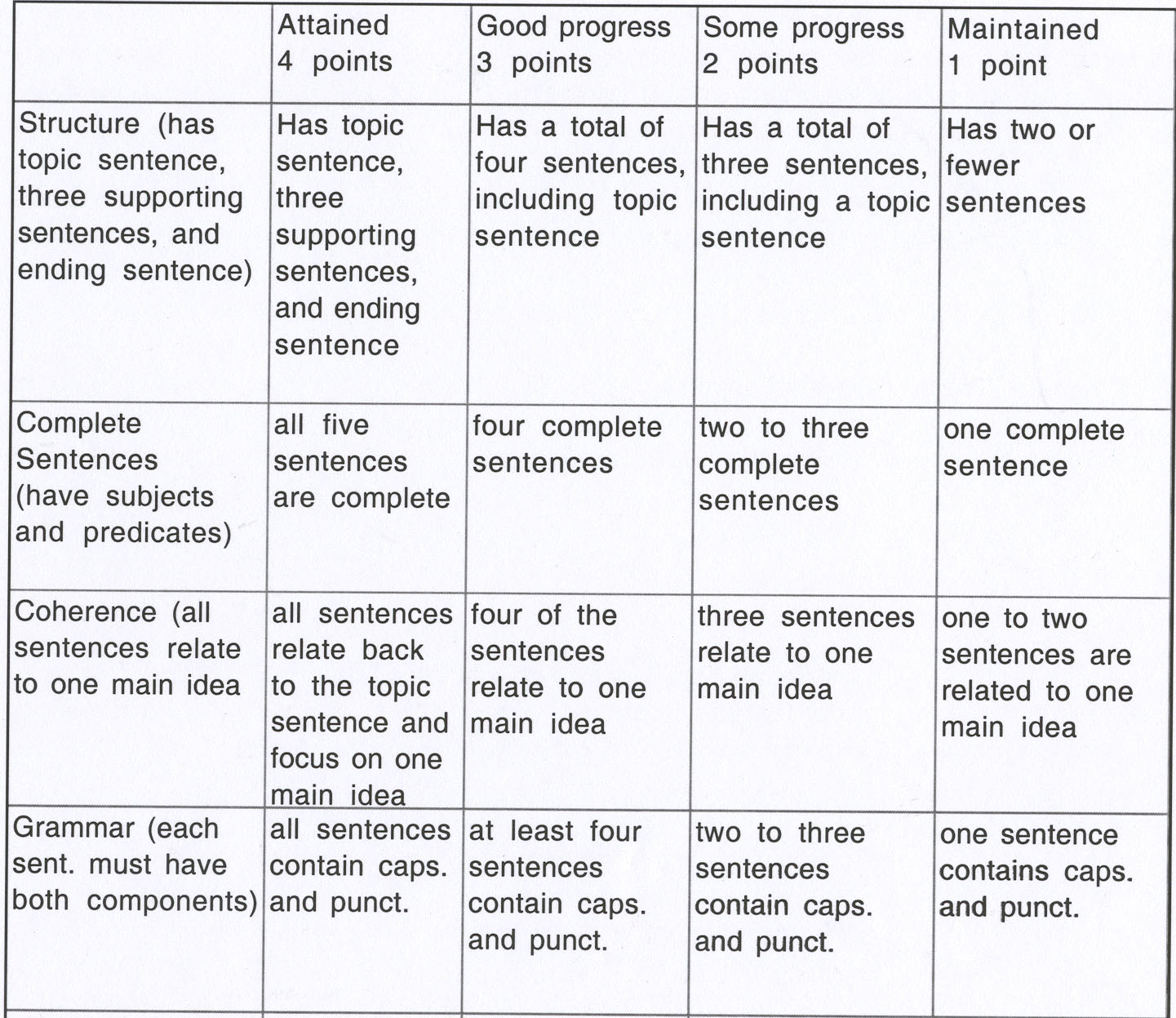
This project was designed to encourage the teacher to think about how assessments are set up in the classroom for students. Consideration of standards was a key component to the project. What makes a project by a student worthy of an A? What constitutes a B? The answers to these questions can be made straight forward by the use of rubrics in the classroom.
Context:
Teachers daily assess students at different levels. From informal assessments
that occur as students are responding to questions from the teacher to
formal assessments in the form of standardized testing, a teacher is learning
the fine points of determining what a student has gained from instruction.
Teachers must be critical of their self- formulated assessments, especially
performance assessments. The use of rubrics in the classroom is highly
recommended for the benefits of the teacher and the students.
Impact:
By creating fair, non- biased performance assessments, teachers are
able to document pupil progress as free of judgment as possible. Each student
knows the expectations a teacher has for the assignment and what criteria
will be used to grade the assignment beforehand. Use of items such as rubrics
make the criteria and grading for the teacher clear so that the students
are not judged based on merits.
Alignment:
Standard Two- Teachers know the
subjects they teach and how to teach those subjects.
Teacher- created assessments are used in all subject areas. Teachers
must be able to create non biased tools to assess performance.
Standard Three- Teachers are responsible
for managing and monitoring student learning.
This represents the teachers command of applying multiple methods for
measuring the growth of individual students and the class as a whole.